

 Gift Cards
Blade Grind Comparison: Which Grind Is Best for Chopping, Slicing, or Utility?
19th Apr 2026
A Practical Guide to Choosing the Right Edge for How You Actually Use Your Knife
There’s a moment most Knife owners hit eventually. You’ve got a blade you love, but something feels… off. Maybe it struggles to slice cleanly. Maybe it wedges in wood when you try to chop. Maybe it’s sharp, but not useful. That’s usually when you realize:
It’s not just the knife, it’s the grind.
Blade grind is one of the most important (and most overlooked) factors in how a knife performs. And once you understand it, choosing the right knife becomes a whole lot easier.
What Is a Blade Grind?
A blade grind refers to how the steel is shaped from the spine (top of the blade) down to the edge. It determines:
- How thin or thick the edge is
- How the blade moves through material
- How strong or delicate the edge will be
According to knife engineering principles, thinner edges reduce cutting resistance, while thicker edges increase durability and resistance to damage.
In simple terms: Grind = how your knife cuts, slices, and survives use.
The Most Common Blade Grinds (And What They’re Actually Good At)
Let’s break down the main grinds you’ll see and where they shine.
Flat Grind (Full Flat Grind)
Best for: Slicing, general use, everyday utility
A flat grind tapers evenly from spine to edge, creating a relatively thin cutting surface.
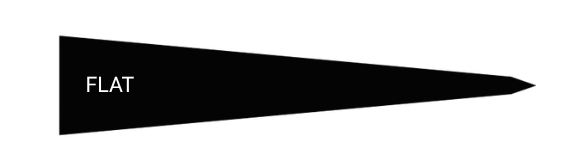
Why people love it:
- Excellent slicing performance
- Low resistance when cutting
- Versatile across many tasks
Limitations:
- Not ideal for heavy chopping
- Can be less durable under extreme stress
If you’ve ever used a knife that “just glides” through cardboard, food, or rope—that’s likely a flat grind doing its job.
Hollow Grind
Best for: Fine slicing, precision cutting
A hollow grind curves inward, creating a very thin edge.
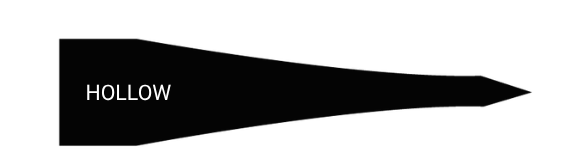
Why people love it:
- Extremely sharp edge potential
- Great for slicing soft materials
- Minimal resistance
Limitations:
- Edge is thinner and more delicate
- Not suited for heavy-duty or impact tasks
This grind is commonly seen on straight razors and some hunting knives, where precision matters more than durability.
Scandi Grind (Scandinavian Grind)
Best for: Woodworking, carving, bushcraft
The Scandi grind has a single, wide bevel with no secondary edge.

Why people love it:
- Easy to sharpen (great for beginners)
- Excellent control for carving
- Strong edge for controlled cuts
Limitations:
- Not the best slicer
- Can bind in thicker materials
If you’ve ever tried to carve a tent stake or feather stick, a Scandi grind feels almost like it “locks in” to the wood; it’s incredibly controlled.
Convex Grind
Best for: Chopping, heavy-duty use, durability
A convex grind curves outward, creating a thicker, reinforced edge.

Why people love it:
- Extremely durable
- Resists chipping and damage
- Excellent for chopping and impact
Limitations:
- Not as efficient for slicing
- Harder to sharpen without practice
This grind is often used on kukris, axes, and heavy outdoor knives because it can handle repeated impact.
According to traditional blade design principles, convex edges distribute force more evenly, which helps prevent edge failure during chopping tasks.
Saber Grind (Partial Flat Grind)
Best for: Utility, field use, balanced performance
A saber grind starts partway down the blade, leaving more thickness near the spine.

Why people love it:
- Stronger than full flat grinds
- Good balance of slicing and durability
- Common in tactical and outdoor knives
Limitations:
- Doesn’t slice as cleanly as a full flat grind
- Not as tough as a full convex grind
Think of it as a middle-ground grind; not extreme in either direction.
Other Blade Grinds You May See (But Less Common)
While the grinds above cover most knives used for everyday carry, outdoor use, and collecting, you may also come across a few more specialized blade grinds.
Compound Grind
A compound grind combines two or more grind types on a single blade. For example, a knife might have a flat grind near the handle for slicing and a thicker grind near the tip for strength.

Why people love it:
- Multi-purpose performance
- Knives designed for both slicing and durability
Limitations:
- More complex to sharpen
- Performance varies depending on the design
Think of it as a “hybrid” blade; built to do more than one job reasonably well.
Chisel Grind
A chisel grind is flat on one side and beveled on the other (similar to a woodworking chisel).

Why people love it:
- Precision cutting
- Certain tactical or culinary applications
Limitations:
- Cuts can pull slightly to one side
- Less intuitive for beginners
- Not ideal for general-purpose use
This grind is more common in specialty knives, including some Japanese kitchen knives and certain tactical designs.
Which Grind Is Best for Chopping?
Best choice: Convex grind
- Handles impact well
- Less likely to chip
- Maintains edge integrity under stress
This is why blades like kukris often use convex geometry; it’s built for repeated force.
Which Grind Is Best for Slicing?
Best choices: Flat grind or hollow grind
- Thin edge reduces resistance
- Cleaner cuts through soft materials
- Better for food prep, rope, cardboard, etc.
Flat grind is more durable; hollow grind is sharper but more delicate.
Which Grind Is Best for Utility (Everyday Use)?
Best choice: Flat grind or saber grind
- Balanced performance
- Handles a variety of tasks
- If you only have one knife, this is where you want to be.
Best choice: Flat grind or saber grind
So… Which Grind Should You Choose?
It comes down to how you actually use your knife.
Choose a convex grind if you:
- Chop wood or heavy materials
- Need durability over precision
Choose a flat grind if you:
- Want a true all-purpose knife
- Do a mix of slicing and light-duty work
Choose a Scandi grind if you:
- Focus on bushcraft or carving
- Want easy sharpening
Choose a hollow grind if you:
- Prioritize sharpness and fine slicing
The Biggest Mistake People Make
Buying a knife based on how it looks, not how it’s ground. A blade can be beautifully made, historically accurate, or visually striking, but if the grind doesn’t match your use, it won’t perform the way you expect.
The Grind Is the Difference
Two knives can look nearly identical on the outside but perform completely differently because of their grinds. Once you understand that:
- Chopping becomes easier
- Slicing becomes cleaner
- Choosing knives becomes intentional
And that’s when you stop collecting randomly and start collecting smart.
Explore Knives Built for Real Performance
If you’re looking for knives designed with purpose—from durable choppers to versatile utility blades—explore Atlanta Cutlery’s collection Because the right blade isn’t just about steel, it’s about geometry that works.