

 Gift Cards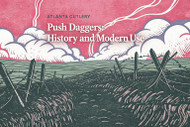
Push Daggers: History and Modern Use
Posted by Silas on 1st Jul 2026
There is a kind of blade that does not swing. It does not slash or arc through the air looking for an opening. It drives forward, straight from the fist, the way a man's arm was built to move before anyone taught it otherwise. That is the push dagger, and it has outlived most of the weapons invented alongside it because it never asked the hand to do anything unnatural.
An Old Idea, Rediscovered Often
The push dagger's lineage runs back centuries, though it was born more than once in more than one place. In India, the katar took this same principle and built an entire fighting tradition around it, a horizontal grip and a blade that extended the punch rather than replacing it. European knife makers arrived at similar answers independently, usually in the same circumstances: close quarters, no room to draw back a swing, and a need for something that worked when there was barely space to move at all.
What ties these designs together is not decoration or region. It is geometry. A T shaped or perpendicular handle lets the blade sit in line with the forearm, so the full weight of a thrust travels straight through the point instead of leaking out sideways through the wrist. No other knife pattern asks so little of the hand holding it.
The Trenches Made It Modern
The push dagger's most famous chapter came in the first decades of the twentieth century, in the mud and narrow confines of trench warfare. Soldiers found themselves fighting in spaces too tight for a rifle and bayonet to be of much use, and the old logic of the punch dagger reasserted itself. Trench knives of the era often carried a knuckle guard fused to the grip, turning the weapon into both blade and fist at once, a design choice born entirely of necessity rather than tradition.
That period did more to shape the public image of the push dagger than any single century before it. The knuckle guard trench knife became, for a generation, the default picture people carried of what a fighting knife looked like, and the design still echoes in the tactical and self defense blades sold today.
What the Design Actually Buys You
Set aside the history for a moment and look at what the shape does. A push dagger keeps the blade locked in a fixed relationship to the fist, which means less can go wrong under stress. There is no grip to lose partway through a thrust, no angle to correct mid motion. The hand closes around the handle once, and from there the mechanics take care of themselves.
This is also why the design has never gone out of production. A blade this simple to use reliably is worth more, in practice, than a longer or fancier one that asks more of its owner in the moment it matters.
Where It Sits Today
Modern push daggers show up in two distinct roles. Collectors and reenactors value them as a direct link to trench warfare and the broader history of close quarters fighting, a piece worth owning for what it represents as much as what it does. Everyday carry enthusiasts value the same design for entirely practical reasons: the compact profile, the fixed grip, and a shape that conceals well without sacrificing the mechanical advantage that made it worth carrying in the first place, a category that today includes tactical knives built on the same core idea.
Anyone shopping for one should weigh the same things that mattered a hundred years ago. Full tang construction matters more here than on most knives, since the whole design depends on that connection between blade and grip holding under load. The sheath deserves equal attention, since a push dagger carried loose is a push dagger that will eventually cut something it was not meant to.
The push dagger endures because it solved a problem honestly and never overcomplicated the solution. That is a rare thing in any tool, and rarer still in a weapon.